Turn Your Pet's Photo Into a Custom Portrait
November 2, 2026 · Reviewed by The Portralo Team
Key takeaway
The best pet portraits start with a sharp photo taken at eye level in daylight, with the eyes in focus and no flash. If your pet won't pose with a sibling, you can upload up to five photos and have them merged into one artwork. Pick the style by mood: Simpsons for funny, Pixar for warm, pencil sketch for classic, vector for modern.
A hand-drawn pet portrait is only as good as the photo it starts from, and you may already have a better photo than you think. The trick is knowing what to look for in your camera roll, and which style suits the animal you're actually trying to capture. This guide covers both, plus what happens after you order.
What makes a good photo of a pet
Pets are harder to photograph than people because they don't hold still or look at you on request. Here's what matters most.
- Sharp, visible eyes. The eyes carry a pet's personality, and they're the first thing you notice in a finished portrait. If the eyes are blurry, closed or hidden by fur or shadow, pick a different photo even if everything else about it is perfect.
- Natural daylight. A photo taken near a window or outdoors in soft light shows fur color and texture far better than a dim room. Avoid direct flash: it flattens the face and gives many animals glowing eyes that look nothing like they do in real life.
- Eye level. Get down to your pet's height instead of shooting from above. Photos taken from standing height make the head look small and the body look long, and the face is what a portrait is really about.
- The whole face in frame. Both ears, the full muzzle and the top of the head should be visible. A photo cropped tight across the forehead or with a paw covering the nose gives less to work with.
- No motion blur. A running or shaking pet in low light turns to a smear. A resting or sitting pet is almost always the better source, even if the action shot is the one you love more.
- A simple background. You don't need a plain wall, but a cluttered scene where the pet blends into a similar-colored sofa makes the outline harder to read.
Dark-coated pets deserve a special mention. In a dim photo, a black dog or cat can turn into a silhouette with no visible features. If yours is dark, choose a photo taken in bright daylight so the eyes, nose and fur highlights come through.
A photo straight from a modern phone camera is usually sharp enough. If you're unsure, check that you can zoom in on the face and still see the eyes clearly.
Combining pets (and photos) into one portrait
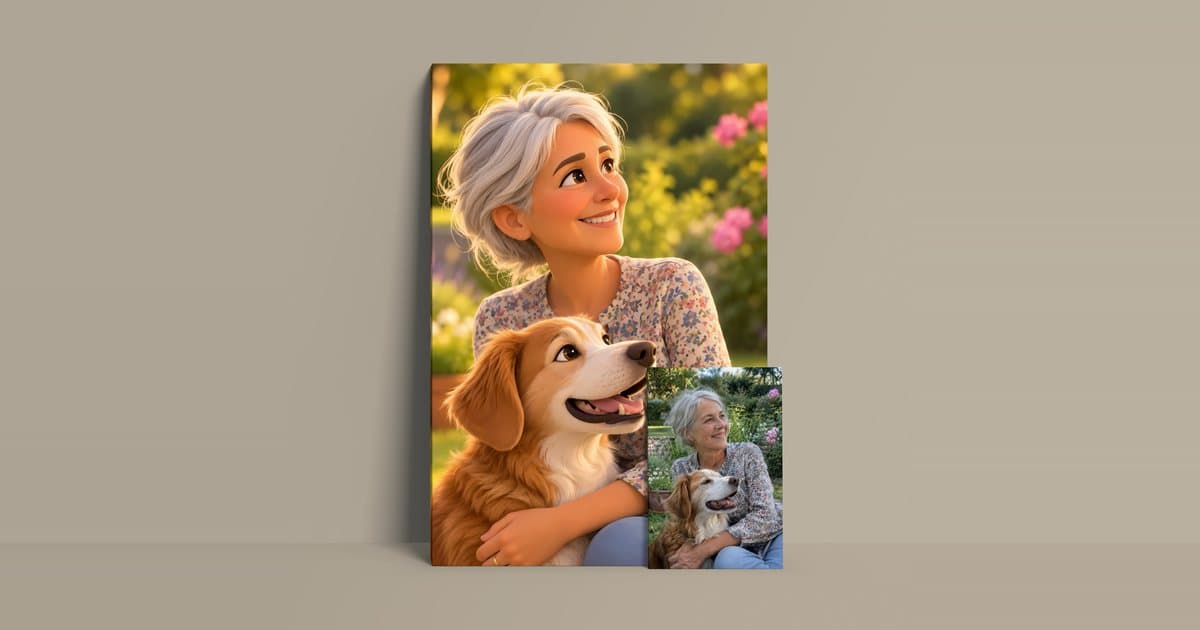
Getting two or three animals to sit together, looking the right way, at the same time, is close to impossible. You don't have to. You can upload up to five photos and they are merged into a single artwork, so a dog photographed on the porch and a cat photographed on the windowsill can share one portrait.
When you order, you also tell us how many people and pets are in the piece, which helps make sure everyone is included. Each additional person or pet adds to the price, and the product page shows the total before you check out. The same approach works for a pet with their owner, or a family portrait that includes the dog.
Choosing a style for your pet
You can order any of the four styles with a pet, and they feel very different on a wall. Think about the mood you want, and about who the portrait is for.
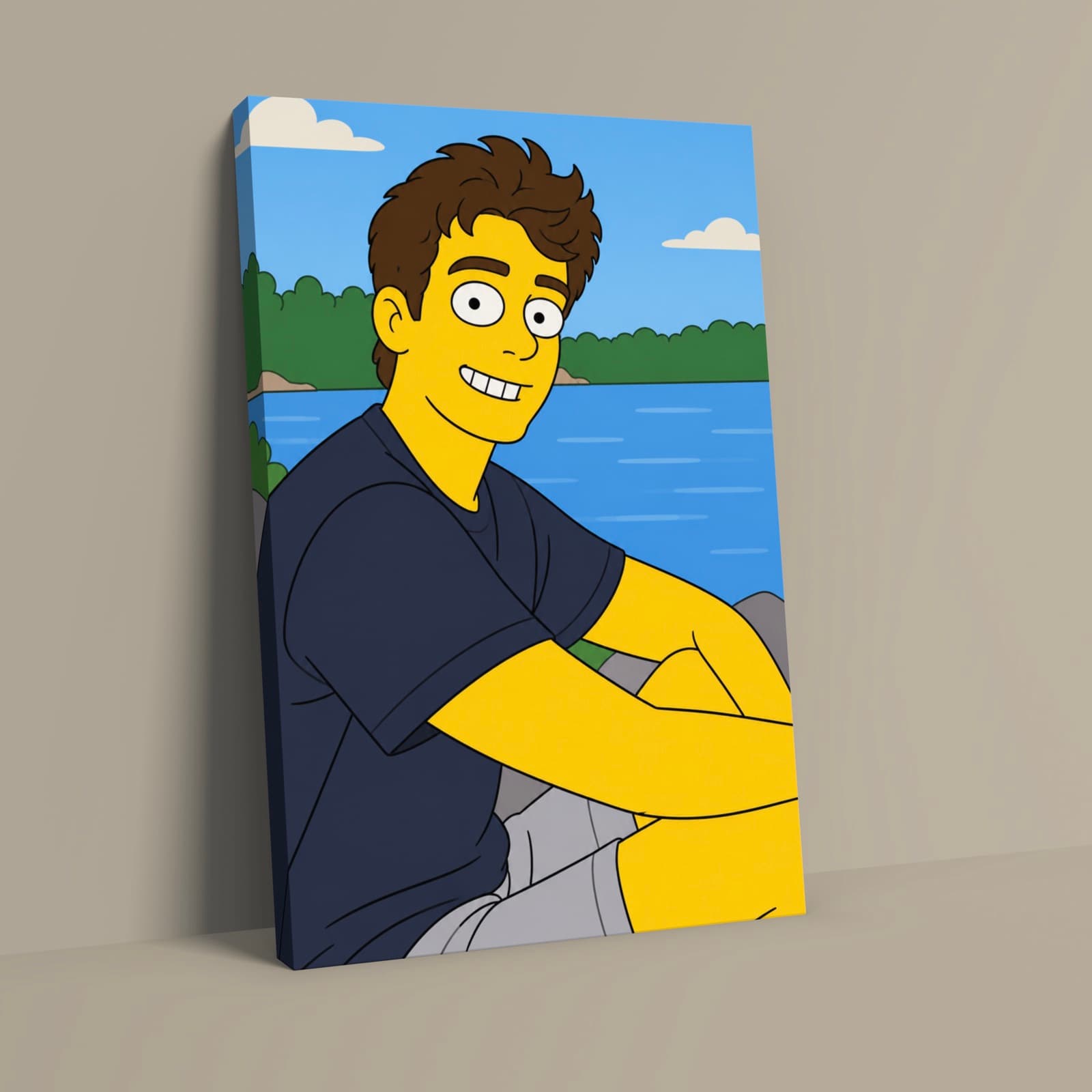
- Simpsons style turns your pet into a bold, outlined cartoon. It's the funny one, a good choice for a pet with a big personality and for a gift meant to make someone laugh before it makes them sentimental.
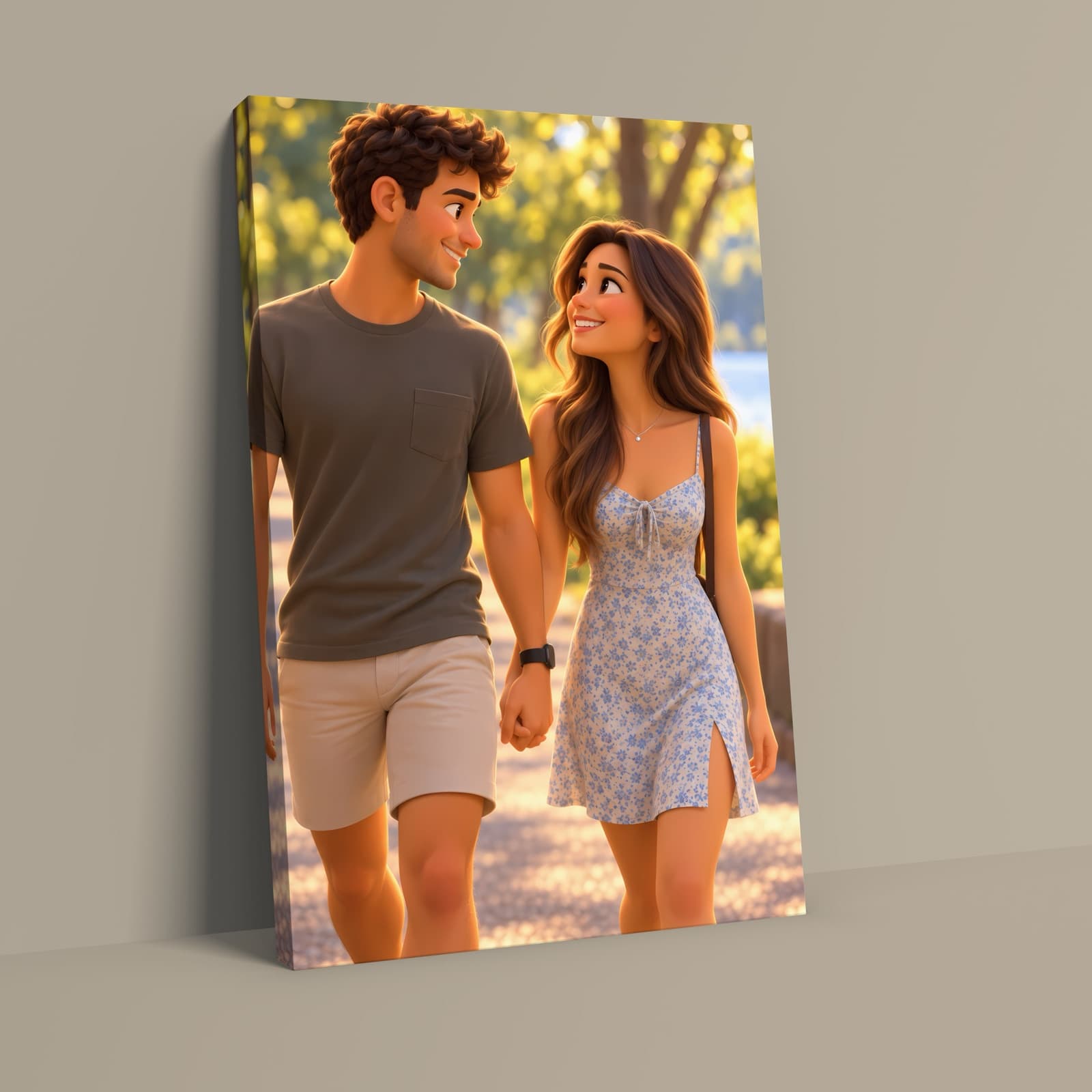
- Pixar style has warm lighting and expressive eyes, the look of a modern animated film. It's a good pick for a pet people are sentimental about, and for family portraits that include a pet. It's also a popular choice for memorial pieces.
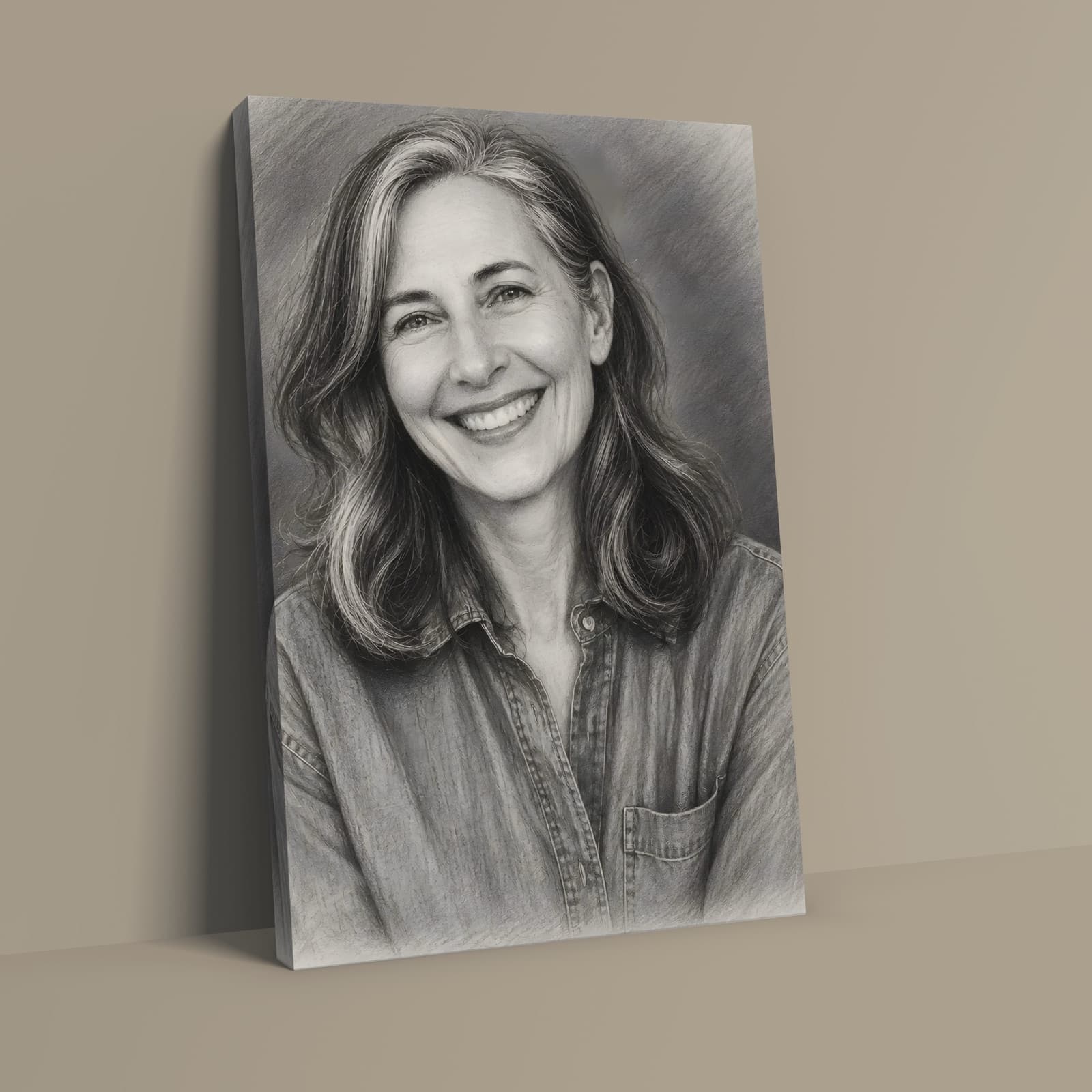
- Pencil sketch is classic graphite shading with real texture. It suits a more formal or traditional room and is a natural fit for a quiet, timeless piece.
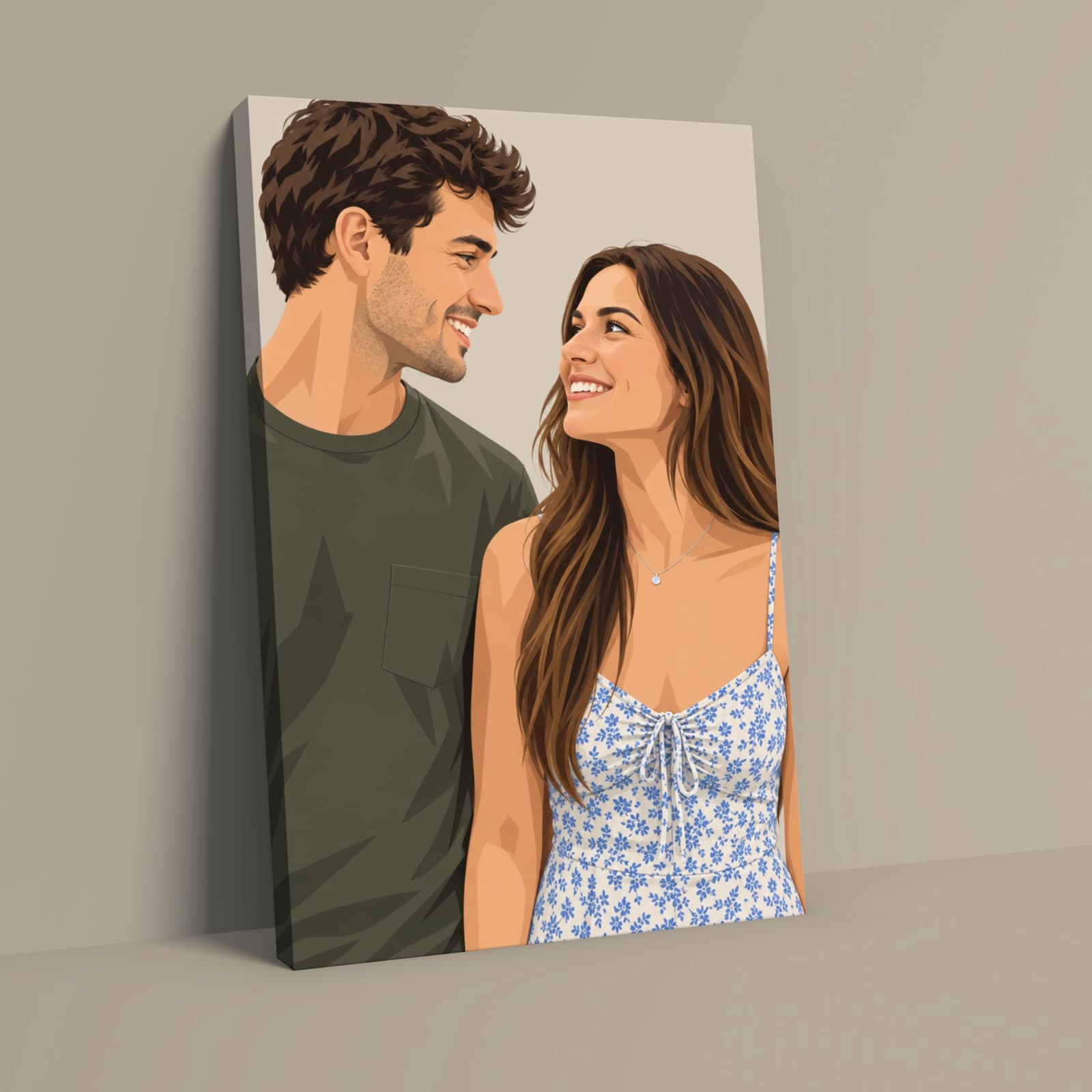
- Vector style uses flat color and clean shapes for a polished, editorial look, and suits a modern, minimalist space.
For side-by-side before and after examples of the cartoon styles, see our guide to turning a photo into cartoon art.
What to put in your notes
There's a box on the product page for notes to the artist, and it's worth using. A few lines can help the first preview land closer:
- Distinctive markings, such as a white patch on the chest, a different colored ear or a scar you want kept (or left out).
- Anything the photo doesn't show clearly, like the real eye color in a shadowy shot.
- Accessories that matter, such as a favorite collar, bandana or tag.
- Anything you'd rather leave out, like a leash, a cone, or a background object.
If you have a nickname for your pet or a trait you want to come through (sleepy, goofy, regal), say so. It gives us something to aim at.
Poster, canvas or digital file
You choose the format when you order: a digital file delivered by email, a poster, or a canvas that's ready to hang with no frame. Physical prints ship free, worldwide, and each product page has a short guide to choosing between them.
What happens after you order
- Upload and describe. Choose your photo or photos, pick a style and size, say how many pets (and people) are in it, and add your notes.
- Preview. You get a preview to review before anything is finalized.
- Revisions. If anything is off, reply and say what to change. Every order includes unlimited revisions, and nothing is final until you approve it.
- Delivery. Most digital orders are ready within 2 to 4 days.
Because each portrait is made specifically for you, cash refunds aren't offered once work has started.
Ready to start? Choose a style and upload your favorite photo.
Frequently Asked Questions
Shop the styles above
Keep reading

Buying Guide · September 16, 2026 · 2 min read
How to Turn a Photo Into Cartoon Art
A simple guide to turning your favorite photo into custom cartoon art, from choosing the right photo to picking a style.
The Portralo Team
We make custom hand-illustrated portraits from your favorite photos, and write about getting the best results from a photo-to-art commission.