Hand-Drawn vs AI Portraits: How to Tell
November 6, 2026 · Updated November 7, 2026 · Reviewed by The Portralo Team
Key takeaway
You can't reliably tell hand-drawn from AI by looking at one image, and detectors get it wrong both ways. Ask the seller who draws it, whether any AI is used, whether you can see work in progress, and how changes work, then ask for one small specific change. At Portralo, every portrait is drawn by our artists by hand.
If you are shopping for a custom portrait, you have probably wondered whether the seller really draws it by hand or runs your photo through an AI tool. It is a fair question, and the answer is hard to read from the picture alone. This guide covers what the words mean, what you can and cannot tell from an image, and the questions and proof that get a straight answer.
The short version: don't rely on spotting flaws or on a detector. Ask how the portrait is made, ask to see the process, and judge the answers.
What "hand-drawn" and "AI" actually mean
Sellers use these words loosely, so it helps to split them into three groups:
- Hand-drawn. An artist draws or paints the portrait, on paper or on a tablet, working from your photo. The result comes from that person's choices about lines, colors and likeness.
- AI-generated. A model produces the image from your photo, sometimes in seconds, with little or no human drawing involved.
- Mixed. An AI image is the starting point and a person touches it up, or an artist uses AI for one step. This is common and not always disclosed.
None of these is wrong in itself. The trouble starts when the listing says one thing and the process is another. If a portrait is sold as hand-drawn, that is what you should receive.
Here is how they compare in practice:
| Aspect | Hand-drawn | AI-generated | Mixed |
|---|---|---|---|
| Made by | An artist, from your photo | A model, from your photo | An AI base, finished by a person |
| Time | Hours to days | Seconds to minutes | Varies |
| Small changes | Targeted: "make the smile smaller" | Often regenerates the whole image | Depends on the step |
| Likeness | Follows the artist's judgment | Can drift from your photo | Varies |
| Price | Higher, since a person's time is in it | Low or free | In between |
| Worth asking | Who draws it? Is there a preview? | Is it labeled as AI? | Which steps use AI? |
What you can see in the image
Some AI images give themselves away, and it is worth a quick look. Things that often go wrong in generated images:
- Small details that don't hold together. Hands and fingers, teeth, jewelry, glasses frames, and the two ears or eyes not matching.
- Garbled text or signatures. Lettering on clothing, signs or a corner "signature" that turns into nonsense on a close look.
- An over-smooth or oddly "perfect" finish. Skin and fabric that look airbrushed, with hair that melts into the background and texture that repeats.
- Lines and brushstrokes that don't make sense up close. A real drawing has lines that start and stop where an artist chose. Generated images can blend areas together with no clear stroke behind them.
- The same look every time. A seller whose whole gallery shares one glossy, generic style, whoever the subject is.
- A likeness that drifts. The face looks like a relative of the person in your photo, not the person.
Treat this as a hint, not proof. The tools get better every few months, so the glitches above are fading, and a clean image doesn't mean it was drawn by hand. A good artist also makes mistakes, so a small flaw doesn't prove anything either.
Do AI detectors help?
A free detector can be a starting point, but it is not an answer. They flag real hand-drawn art as AI and let AI images pass, and a smooth digital finish is enough to confuse some of them. If a tool says "AI" or "human", treat that as one more hint, and never judge a seller on one result.
The better test: ask the seller
The process tells you more than the picture. Before you order, ask:
- Who draws the portraits? One named artist, a team, or "our system"? A direct answer is a good sign.
- Is AI used at any step? A seller who works by hand can say no plainly. A seller who uses AI and is honest about it can tell you where.
- Can I see the process? Ask for work-in-progress sketches, a layered file or a time-lapse. For a one-off commission this is one of the strongest signs, because a finished image alone proves very little.
- Do I see a preview before it is final? You should be able to review the artwork before you approve it, not receive a finished file with no say.
- How do changes work? Look for clear revision terms: how many, and how you ask. Unlimited is better than "one included".
- Can you make one small, specific change? Ask for something like a different shirt color, a smaller smile or a missing earring, and see how they reply. An artist adjusts that one thing. A tool that regenerates the whole picture often changes other things you liked.
- What does it cost, and does the price make sense? A very low price with a very fast turnaround deserves a second look (our price guide shows what goes into a portrait's price). That is not proof of automation, only a reason to ask the questions above.
- Is it in writing? Get the answers in the listing or in a message, along with the revision and refund terms. That is your real protection if the work turns out not to be what was promised.
If a seller dodges these, that tells you something.
Check the seller, not only the image
A few quick checks tell you who you are dealing with:
- A consistent personal style. Look at many pieces, of different people, and ask whether one artist's hand shows through, or whether each looks like a different generator's output.
- Originals next to results. Sellers who make portraits from photos can show the original photo beside the finished piece, so you can judge the likeness yourself.
- Reverse image search. Run a sample image through a reverse image search. If it shows up on other sellers' pages, it may not be theirs.
- Clear wording in the listing. A seller who states how portraits are made, in plain words, is easier to trust than one who only says "custom" or "premium". Some marketplaces also ask sellers to label AI-generated items, so look in the item details. A missing label is a reason to ask, not proof.
- Reviews that describe the work. Read for mentions of the artist and of how changes were handled, not only the star rating.
Red flags
- Won't say who draws it or whether AI is used.
- No preview, or no way to ask for changes.
- A gallery with one glossy look and no originals beside the results.
- Pressure to pay before your questions are answered.
- Samples that appear on other sellers' pages.
When an AI tool is a good choice
AI portraits are not a bad product. They suit a quick profile picture, trying out a look before you commission something, or a bit of fun with friends, and they cost little or nothing. A portrait made for you suits the cases where the result matters: a gift, a print for the wall, or a likeness of someone you care about, where you want a person to read your notes and fix what is off.
What to expect from a good commission
Whoever makes your portrait, a well-run commission has the same shape:
- You send a clear photo and your notes.
- You get a preview to review.
- You ask for changes until it is right.
- You approve it, and only then is it final.
- You receive the file, or the print if you ordered one.
If you are not sure which photo to send, the guides on turning a photo into a cartoon portrait and on pet portraits cover what makes a good source photo.
How we make ours
Every Portralo portrait is drawn by hand by our team of artists, starting from your photo. We don't use AI image generators to make customer portraits.
Here is what that looks like for you:
- You see a preview first. Nothing is final until you approve it.
- Unlimited revisions. Use Request Changes on your order page and say what to change. That includes small things, like a different color or a detail you want fixed.
- Notes for the artist. The notes box on the order form goes to the person drawing your portrait.
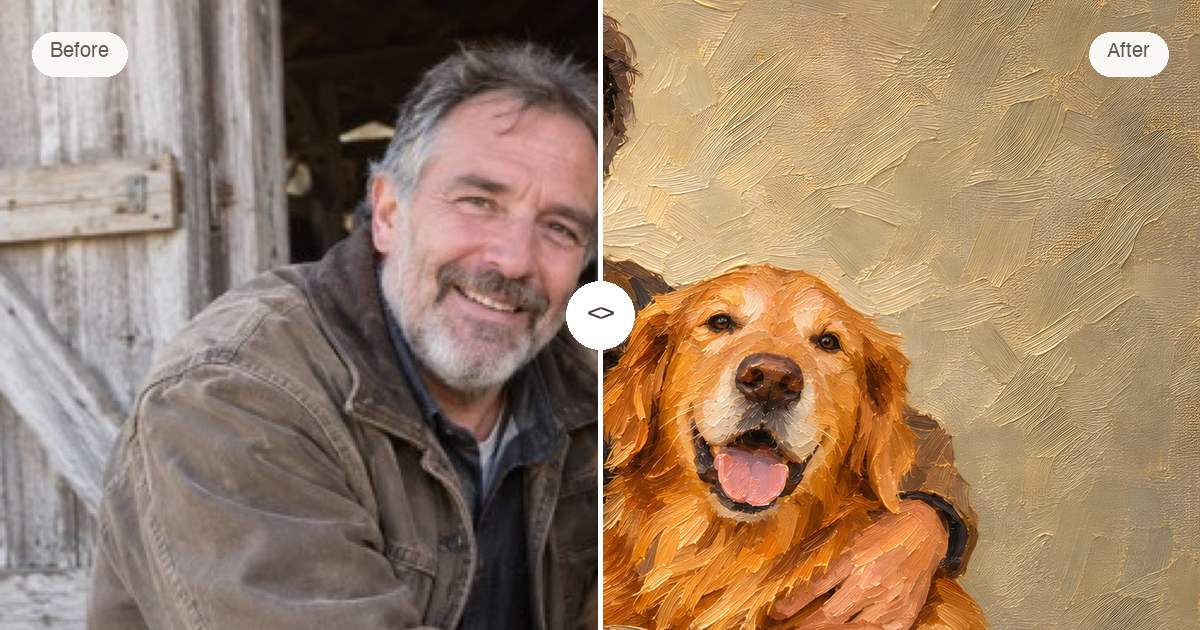
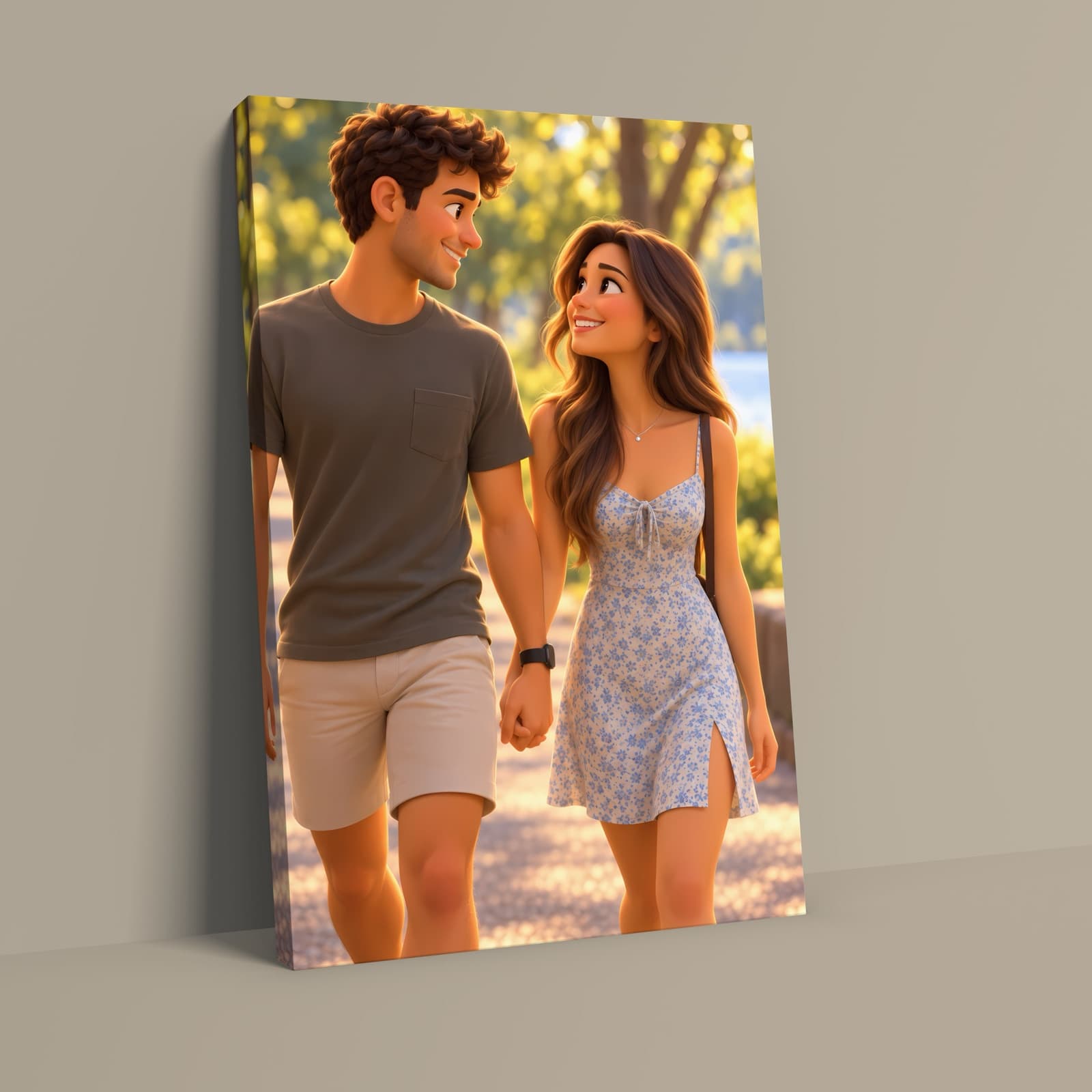
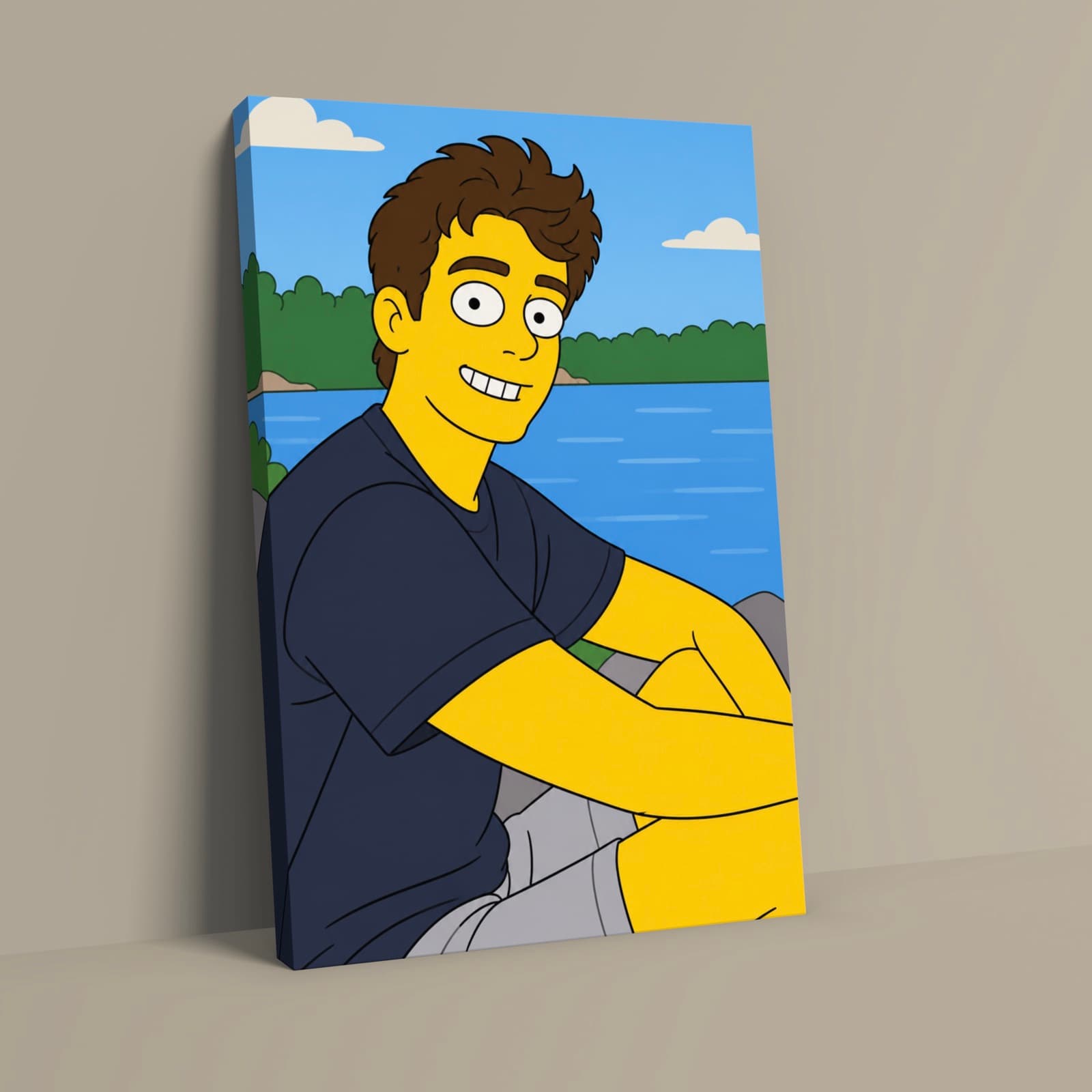
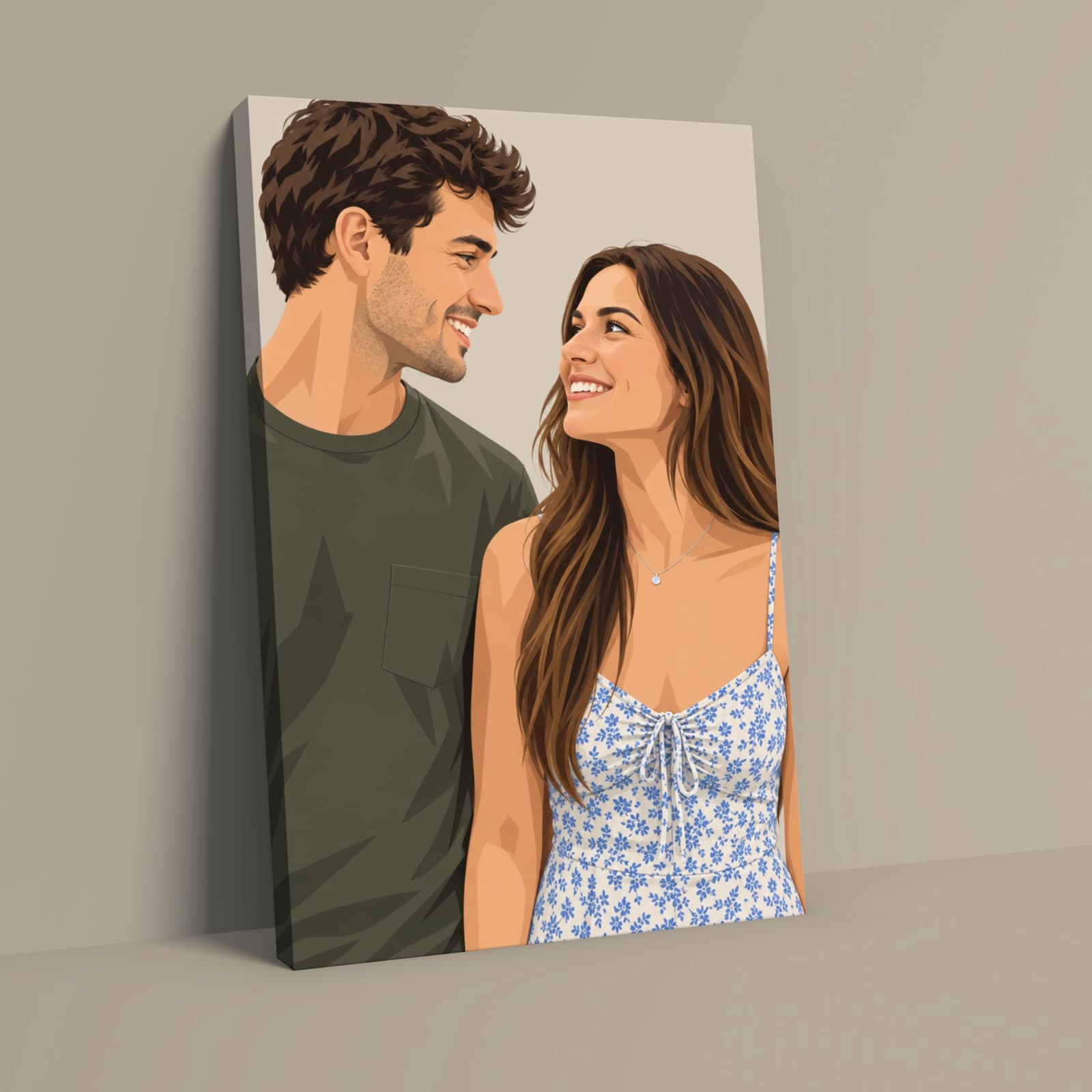
- Real before and afters. The pairs below show an original photo on the left and the finished portrait on the right.
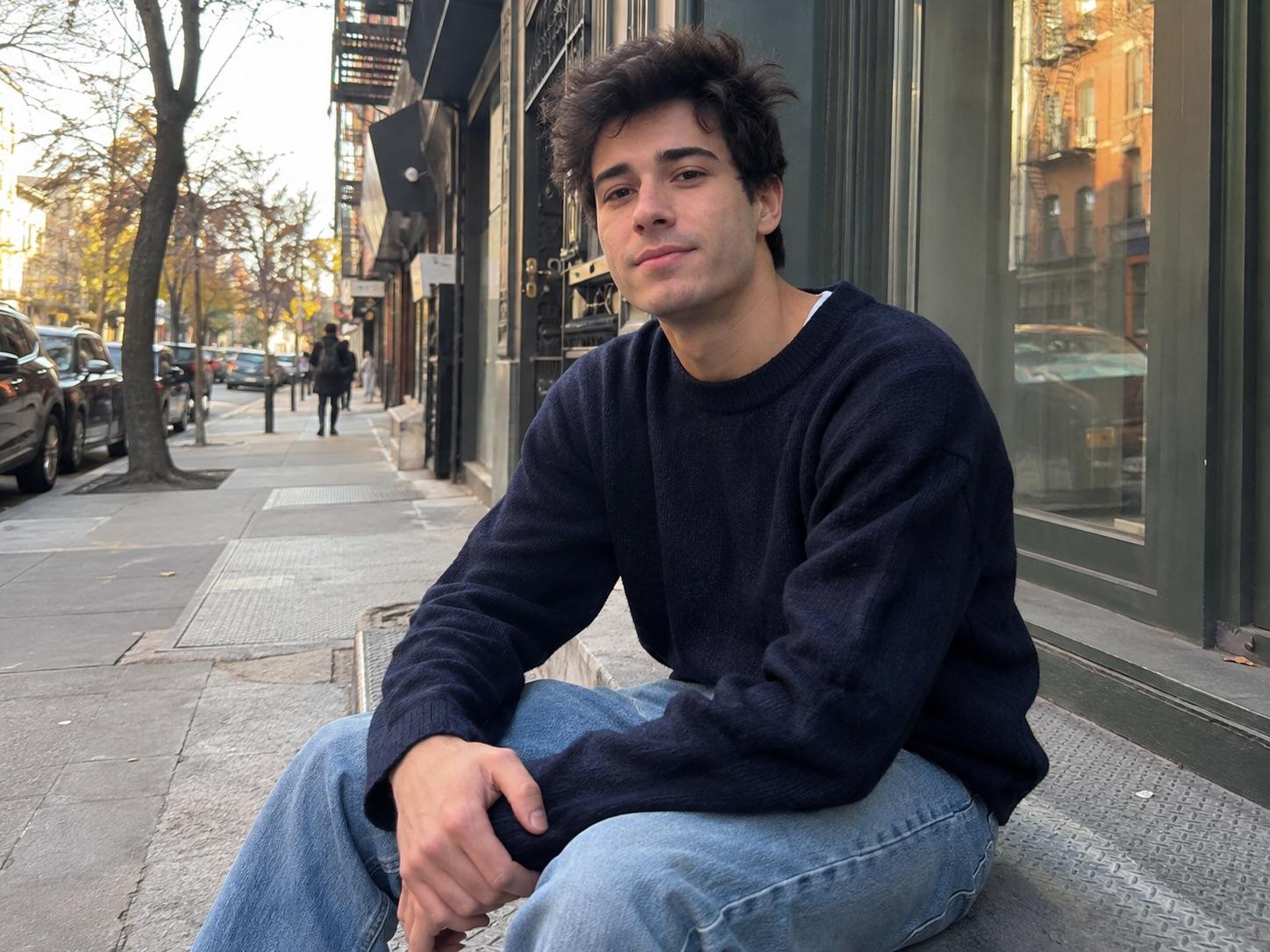
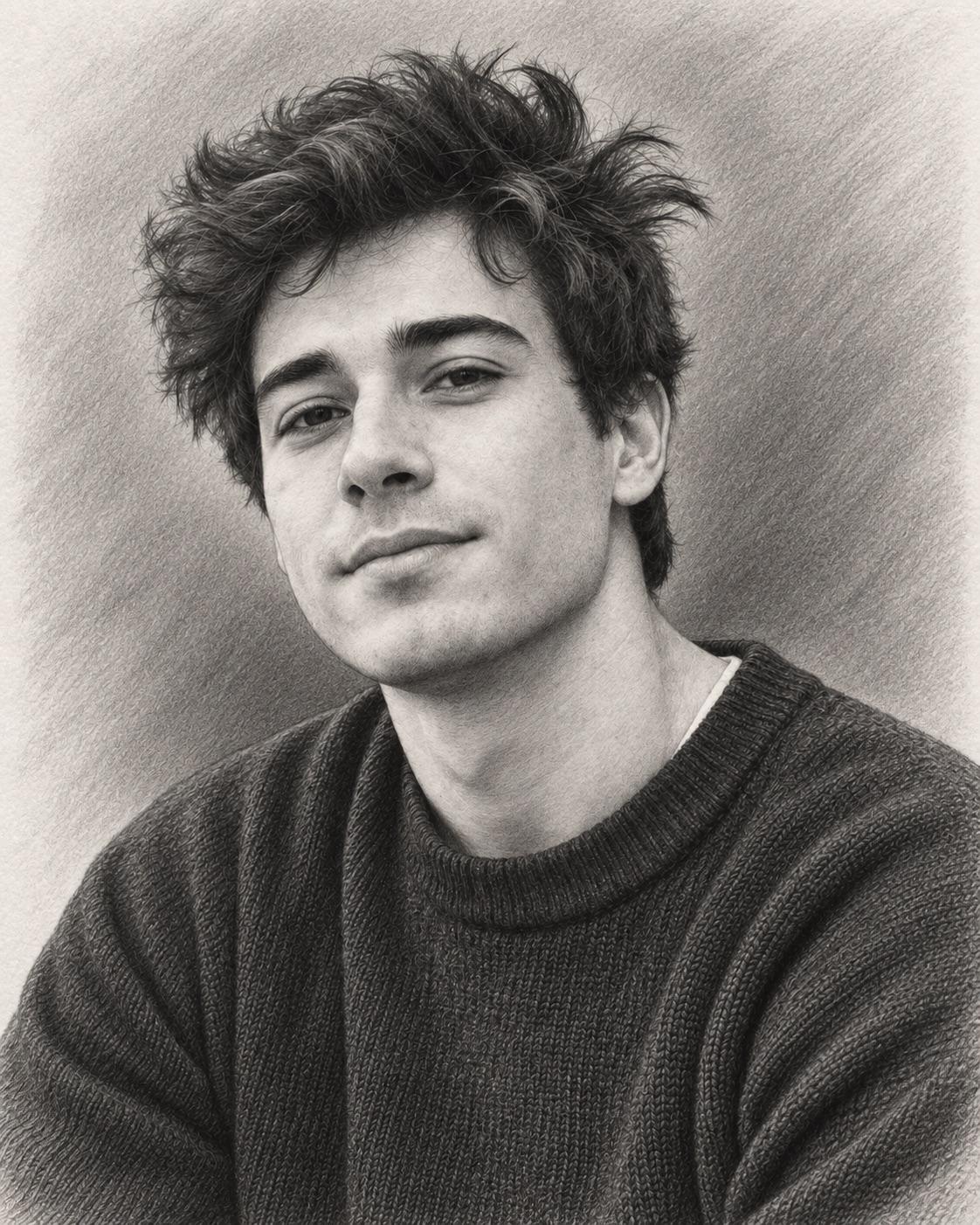
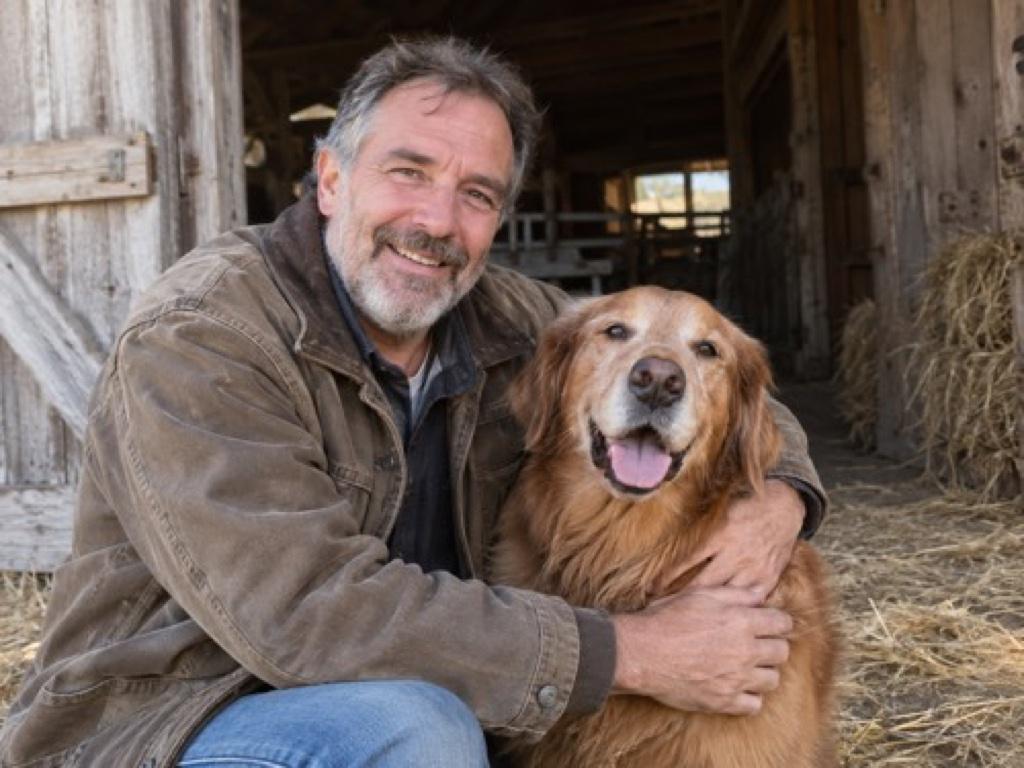
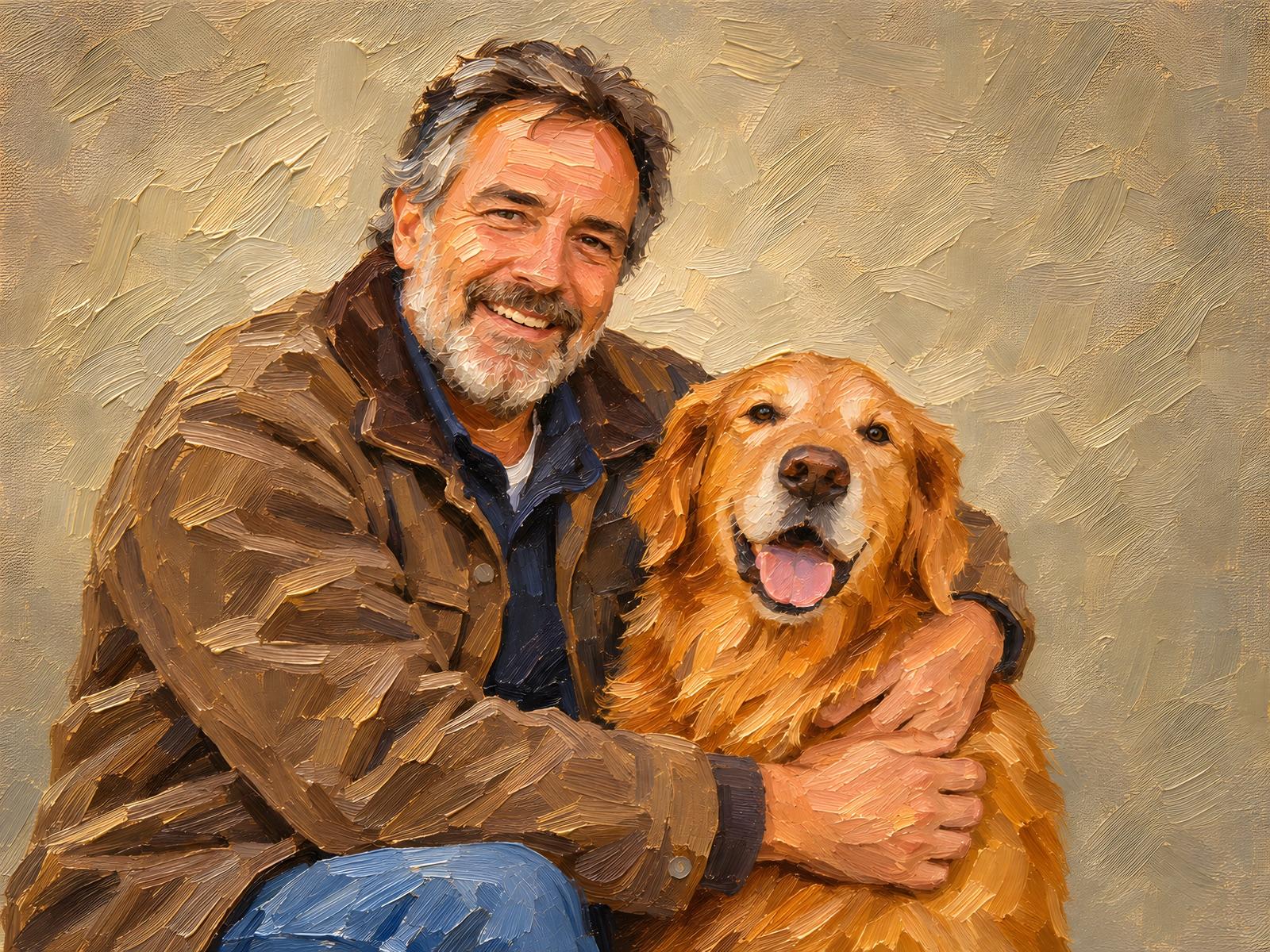
If you want to ask us anything about how a portrait is made before you order, get in touch and we will answer plainly.
When you are ready, browse the styles: cartoon portraits or all portrait styles.
Frequently Asked Questions
Every portrait is drawn by hand by our team of artists, starting from your photo. We don't use AI image generators to make customer portraits. You see a preview before anything is final and can ask for unlimited revisions.
Not reliably. Some AI images show telltale glitches, but the tools improve quickly and a clean-looking image proves nothing either way. The seller's answers about the process, and how they handle a specific change request, are a better test than the image alone.
Only as a hint. Free detectors can flag real hand-drawn art as AI and pass AI images as human, so one result should never decide whether you trust a seller. Use it alongside the seller's answers and proof of process.
Yes, and it happens to real artists. Smooth digital finishes and clean lines can look generated to a detector or a viewer. That is why proof of process, such as sketches or work in progress, and a seller's clear answers matter more than a first impression.
It is a fair request, and for a one-off commission it is one of the strongest signs. A seller who draws by hand can often show sketches, layered files or a time-lapse. You can also ask us anything about how your portrait is made before you order, through the contact page.
It can mean real brushwork, a person painting on a tablet, or sometimes AI output made to look painted. All three get sold under the same words, so ask the seller which medium was used and whether AI was involved.
No. It is a tool, and plenty of people enjoy it. The issue is being told what you are buying. If you are paying for a portrait drawn by an artist, you should get one, and if a seller uses AI at some step, they should say so.
Ask who draws the portraits, whether AI is used at any step, how many revisions you get, and whether you see a preview before it is final. Then ask for one small, specific change, such as a different shirt color or a smaller smile, and see how they respond.
Most of our digital orders are ready within 2 to 4 days. Posters and canvases are printed and shipped by a print partner, so delivery time varies by size and destination.
Use Request Changes on your order page and say what to change. Every order includes unlimited revisions, and nothing is final until you approve the preview.
An app is free and instant, and that is a fine choice for a quick profile picture. A portrait made for you adds a person who reads your notes, a preview, and revisions you can ask for, which matters if it is a gift or a print for the wall.
Shop our styles
Keep reading
Buying Guide · November 2, 2026 · 8 min read
Turn Your Pet's Photo Into a Custom Portrait
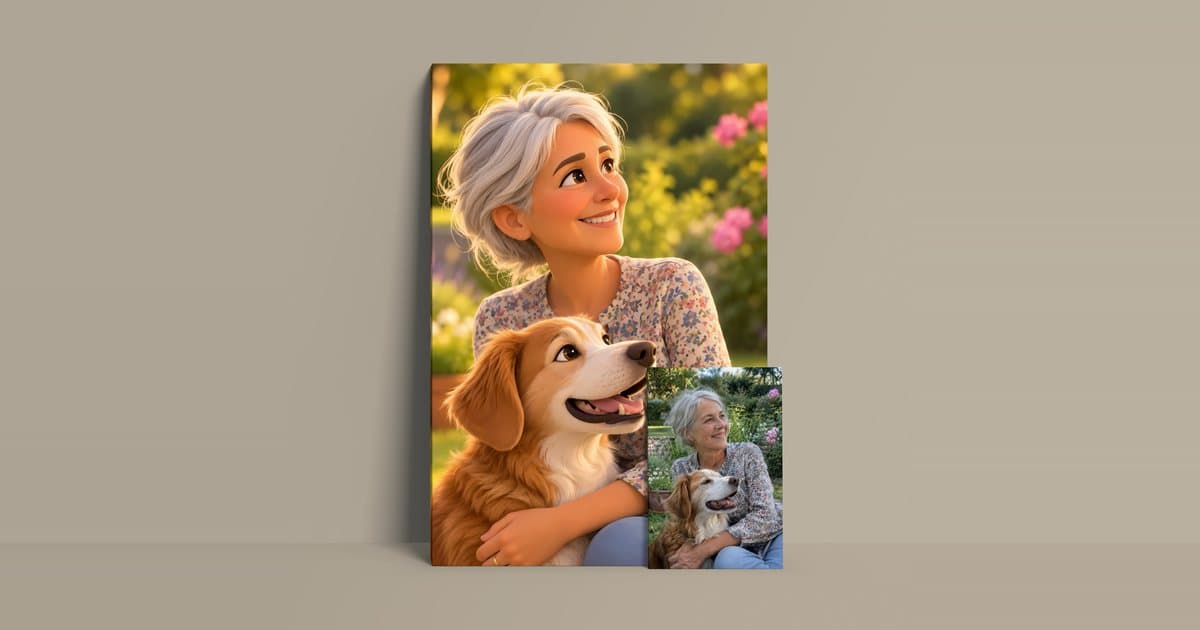
What makes a pet photo work for a custom hand-drawn portrait, how to choose between Simpsons, Pixar, pencil sketch, vector, oil painting, watercolor, color pencil and charcoal styles, and what to expect.
The Portralo Team
We make custom hand-illustrated portraits from your favorite photos, and write about getting the best results from a photo-to-art commission.